
The quiet return of the 36 mm case
For twenty years watches grew. Then, almost without announcement, they stopped — and the mid-century proportions that never really left came back into focus.
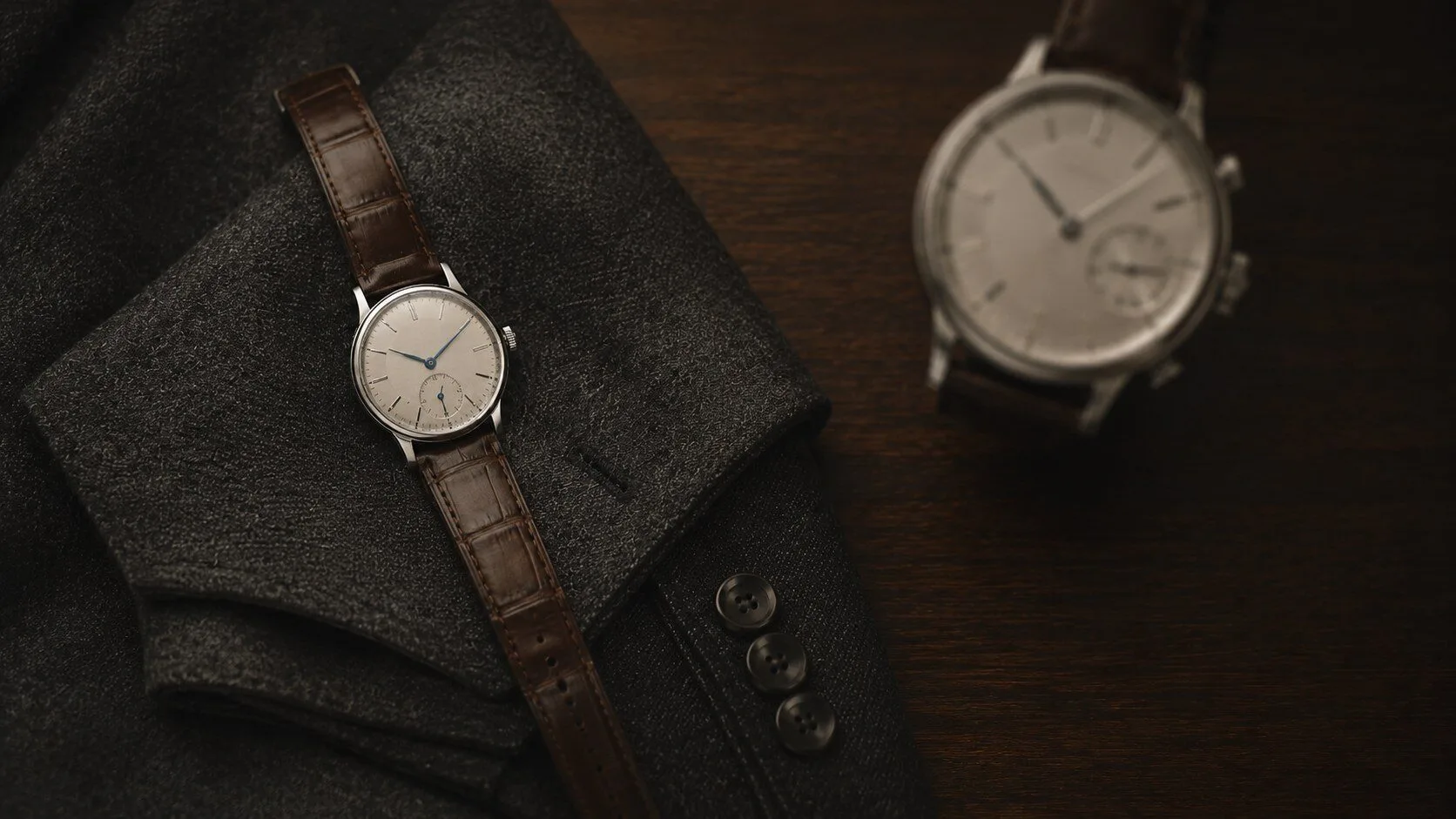
Between roughly 2000 and 2015, the wristwatch inflated. Cases that had settled comfortably at 34 to 36 mm for half a century pushed past 42, then 44, then in a few unfortunate cases beyond 47. The logic was display-case logic: a larger watch reads from further away.
That era is over, and it ended without much ceremony. The most requested case size in our salon this year has been 38 mm, with 36 close behind — and a meaningful share of those requests come from clients who wear a 42 mm watch today and have quietly decided it is too much.
Why the proportions work
A 36 mm case is not a small watch. It is the size the wristwatch settled on when it was still primarily an instrument, refined across the 1940s, 50s and 60s by makers who were designing for daily wear rather than for photography. The dial furniture — indices, handset, date aperture — was drawn to that scale. Enlarge the case without redrawing the dial and you get a watch that reads emptier the bigger it gets.
There is also the matter of the cuff. A 36 mm case with a slim profile passes under a shirt sleeve without catching. Anyone who has spent a working day fighting a thick 42 mm sports watch through a jacket knows exactly what this is worth.
A watch is the only jewellery most people wear every day. It should behave like clothing, not like luggage.
What to look for
Thickness matters as much as diameter — arguably more. A 36 mm case that is 13 mm thick will sit tall and look like a bottle cap. Look for 8 to 11 mm on a time-and-date piece. The good news is that smaller cases tend to house smaller movements, and the proportions usually take care of themselves.
Watch the lug width too. A 36 mm case wants an 18 or 19 mm strap; fit a 20 and the watch reads bottom-heavy. This is one of the few places where a millimetre is genuinely visible.
The end of gendered sizing
The most welcome consequence of this shift is that case size has stopped being a proxy for gender. A 36 mm three-hander is simply a well-proportioned watch, and it is being bought by everyone. Several of the references we sell most consistently are ordered in near-equal numbers by men and women — a sentence that would have read strangely in a catalogue ten years ago.
If you have been waiting for the market to come back to your wrist, it has.
Continue reading
Buying pre-owned with confidence
12 May 2026
Your first mechanical watch: a field guide
28 July 2026
What “in-house movement” actually tells you
30 June 2026