
What “in-house movement” actually tells you
It is the most-quoted phrase in watch marketing and one of the least precise. Here is what it means, what it does not, and when it should influence your decision.
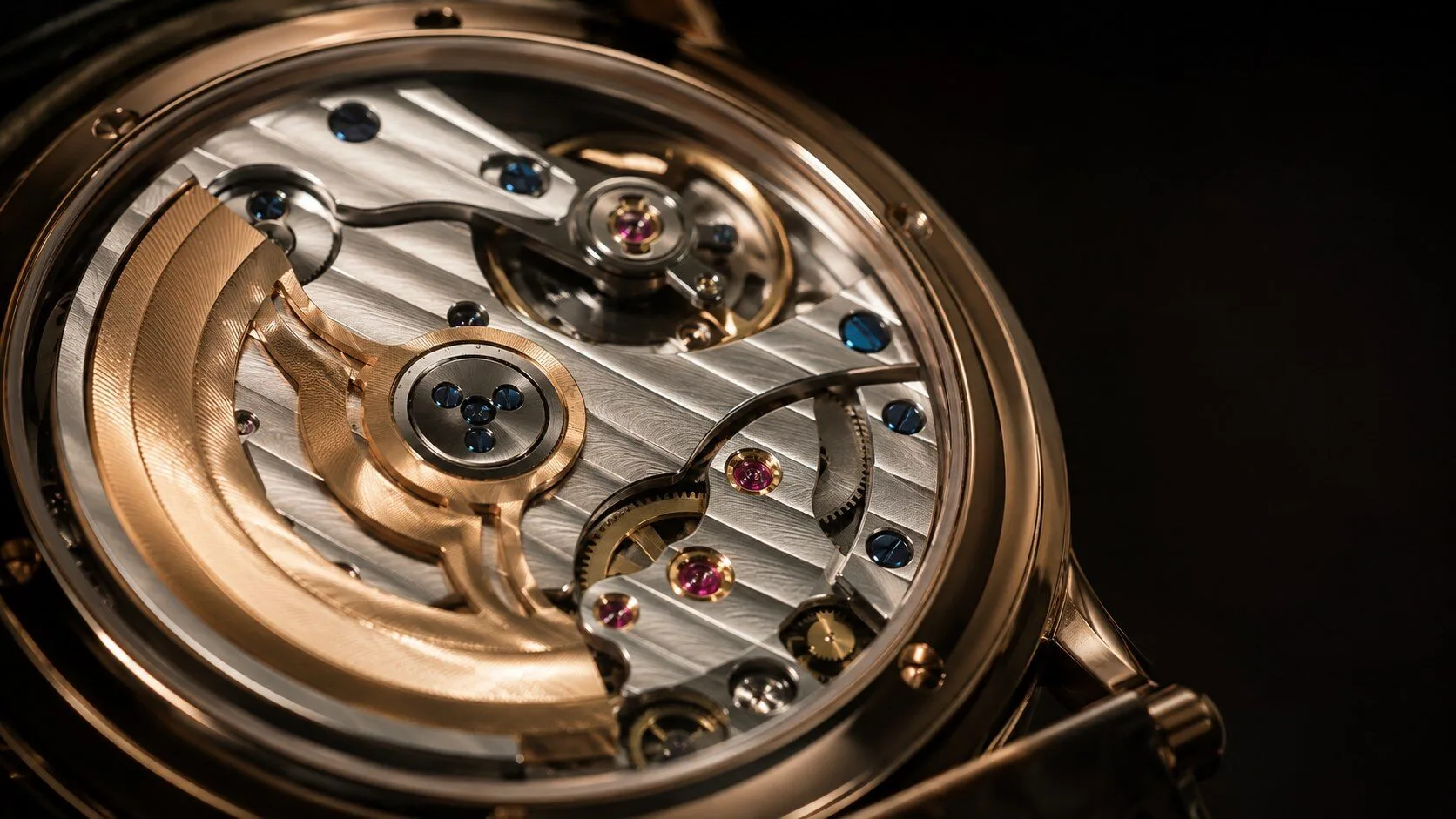
Ask why one watch costs three times another with the same specification and you will often be told that the more expensive one has an in-house movement. It is a real distinction. It is also a much softer one than the phrase suggests.
There is no agreed definition
No regulator polices the term. A movement assembled in a manufacturer’s own workshop from components made by four suppliers may be called in-house. So may one where the maker cuts its own mainplate, bridges, escapement and hairspring — a genuinely rare capability, held by perhaps a dozen houses worldwide.
Between those poles sits almost everything on the market. A useful question to ask a retailer is not “is it in-house?” but “who makes the escapement and the hairspring?” Those two components are the hardest to produce well and the most revealing answer you will get.
What the third-party movements are actually like
The industry’s workhorse calibres — the ETA 2824 family, the Sellita SW200, the Miyota 9000 series — are extremely good. They have been refined across decades and millions of units, every watchmaker on earth can service them, and parts are available anywhere. A well-regulated, well-finished third-party movement in a thoughtfully made case is a better watch than a mediocre in-house calibre in the same case, and it will cost less to keep running.
Serviceability is a feature. It just is not one anybody puts on the dial.
When in-house genuinely matters
Three situations justify the premium. The first is a movement that does something the standard calibres cannot — a true annual calendar, a chronograph with a column wheel and vertical clutch, an unusually long power reserve. The second is finishing: anglage, black polishing, hand-applied côtes de Genève, visible through a sapphire back and only worth the money if you will actually look at it. The third is architecture — a movement designed around the watch, giving a thinner case or a better-placed crown than a bought-in calibre would allow.
Outside those three, the phrase is doing marketing work rather than engineering work.
How to inspect one
Under a loupe, look at the edges. Hand-finished bevels catch light in a continuous, slightly uneven line; machined ones are perfectly regular and slightly dull. Check the screw heads: crisp, polished slots with no burring indicate care. Look at the parts you were not meant to see — the underside of a bridge, the finish inside a jewel setting. Houses that finish the hidden surfaces finish the visible ones properly too.
We are happy to open any watch in the salon and hand you the loupe. It is the most persuasive argument either way.
Continue reading
Buying pre-owned with confidence
12 May 2026
The quiet return of the 36 mm case
14 July 2026
Reading a dial: a short vocabulary
26 May 2026